What the GitHub Outage Actually Teaches Us About Depending on AI Coding Agents in Production Pipelines
At 13:40 UTC on August 17, 2026, GitHub opened an incident for "performance problems affecting some services." By 14:45 UTC, Pull Requests, Issues, Actions, and Webhooks had all been escalated to degraded availability. By 16:59 UTC, GitHub had mitigated and recovered seven core services. Copilot was not one of them.
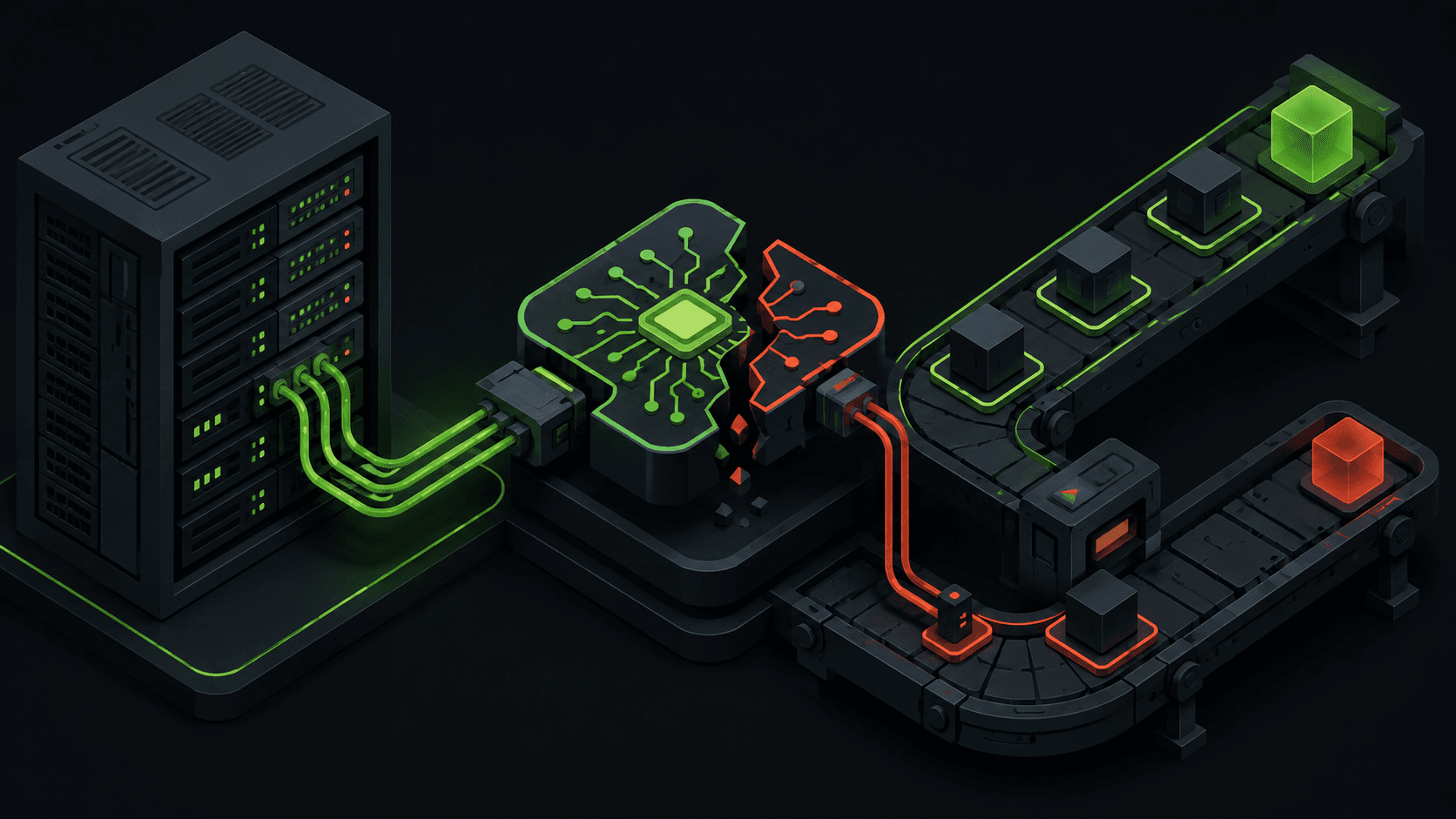
Copilot stayed in Major Outage for hours after everything else came back — not because an AI model went down, but because a bug in Microsoft's own VS Code editor sent ten times the normal traffic to the service that authenticates Copilot users, according to GitHub's own post-incident report. The root failure — a capacity-autoscaling setting that didn't trigger at a U.S. data center — took down GitHub's login system entirely. The AI layer had a second, independent failure that outlasted the first one.
That's the part most "GitHub is down again" coverage missed, and it's the part that matters if your team has an AI coding agent anywhere in its release path: the outage that kills your pipeline usually isn't the one you modeled.
What Actually Broke on August 17 — And Why Did Copilot Stay Down Longest?
The timeline, per GitHub's status page and post-incident report:
- 13:40 UTC — GitHub opens the incident. Web and API error rates climb to ~20%; archive downloads and raw repository content (the endpoints
npm install, Docker builds, and CI scripts hit constantly) climb to ~50%. - 14:24 UTC — SAML, OIDC, SCIM, and Team Sync go down, locking SSO-gated enterprise orgs out entirely.
- 16:59 UTC — Seven core services (API, Actions, Git Operations, Issues, Pages, Pull Requests, Webhooks) are declared recovered.
- Hours later — Copilot is still down. Root cause: a bug in VS Code sent 10x normal traffic to Copilot's auth-and-routing layer, which was still recovering from the same networking failure that had taken out GitHub's login system.
Two separate things had to go wrong for Copilot's outage to outlast the platform's: a data-center capacity failure, and a client-side bug that hammered the one service still struggling to recover. Neither was an AI reliability problem. Both were infrastructure and client-integration problems that happened to sit in the AI agent's critical path.
That's the pattern worth internalizing — not "GitHub had an outage," but "the AI-agent-dependent piece of the pipeline recovered on a different clock than everything else, for reasons that had nothing to do with the AI."
What Does This Reveal About AI Coding Agents as Hidden Single Points of Failure?
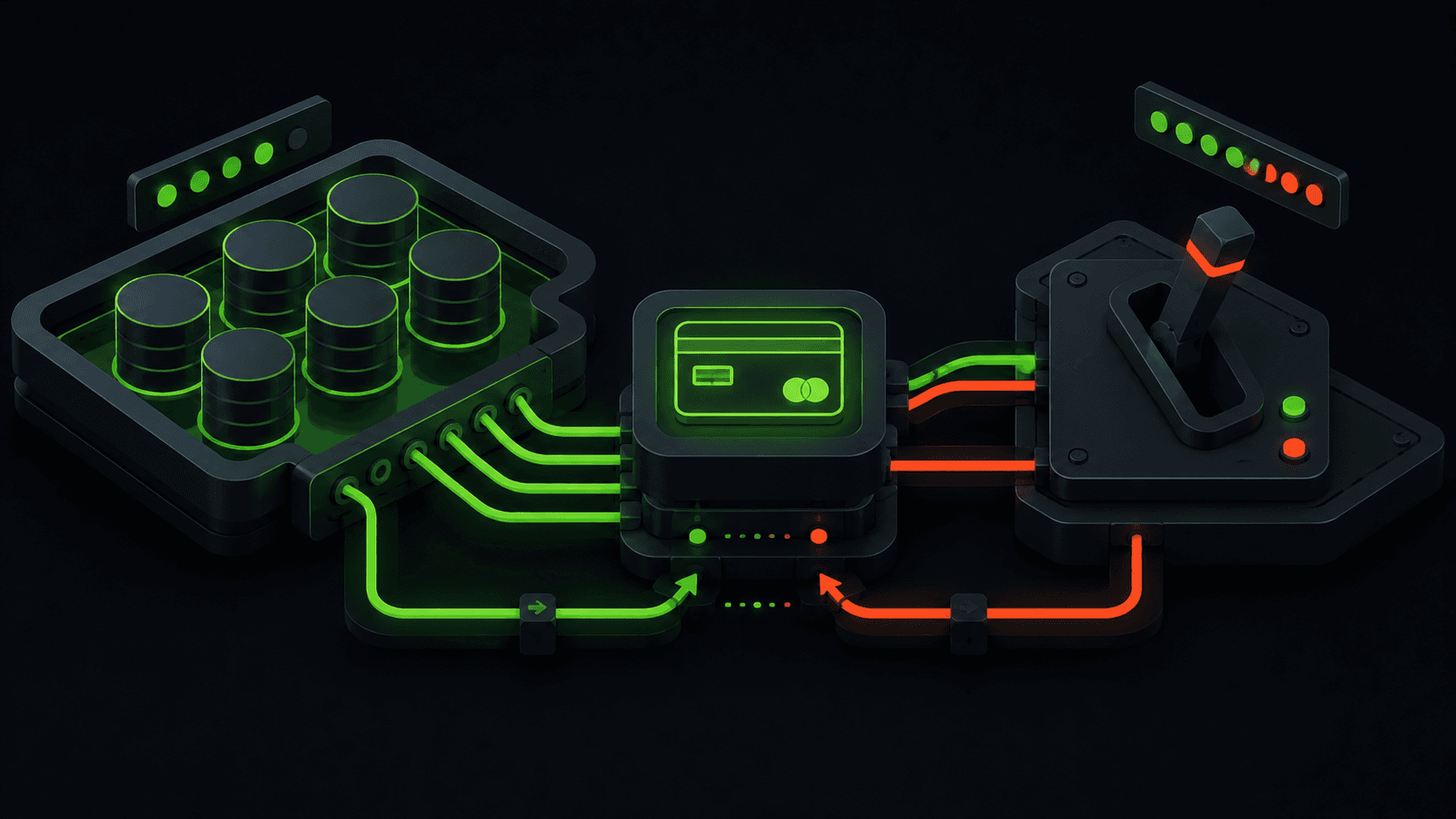
Most teams model AI coding agents the same way they model a linter or a formatter: a nice-to-have that fails soft. In practice, once an agent is wired into a merge gate, a code-review step, or a deploy approval, it becomes a hard dependency with its own failure domain — one that doesn't fail at the same time, or for the same reasons, as the rest of your stack.
August 17 showed three coupling risks that rarely show up in an architecture review until they've already cost you a day:
- Auth-layer coupling. Copilot's login service and GitHub's core login system shared enough infrastructure that a core outage degraded the AI layer too — but not enough that they recovered together.
- Client-side amplification. A bug in the editor your engineers use every day turned a recovering service back into a failing one. Your CI pipeline doesn't control that failure mode at all.
- No independent health signal. Teams that gate merges on an AI review step generally don't have a fast, automated way to detect "the agent is unreachable" and fail over — they find out when a human notices nothing has merged in three hours.
This is why GitHub's CTO, Vladimir Fedorov, said in April that the company scrapped a plan to grow capacity tenfold and rebuilt for thirtyfold growth instead — AI-driven traffic broke the original model that fast. If the platform vendor's own capacity planning was outpaced this badly, betting your release pipeline on zero AI-agent downtime isn't a risk you're managing — it's one you haven't priced yet.
How Do You Architect a Pipeline That Degrades Gracefully When Your AI Provider Doesn't?
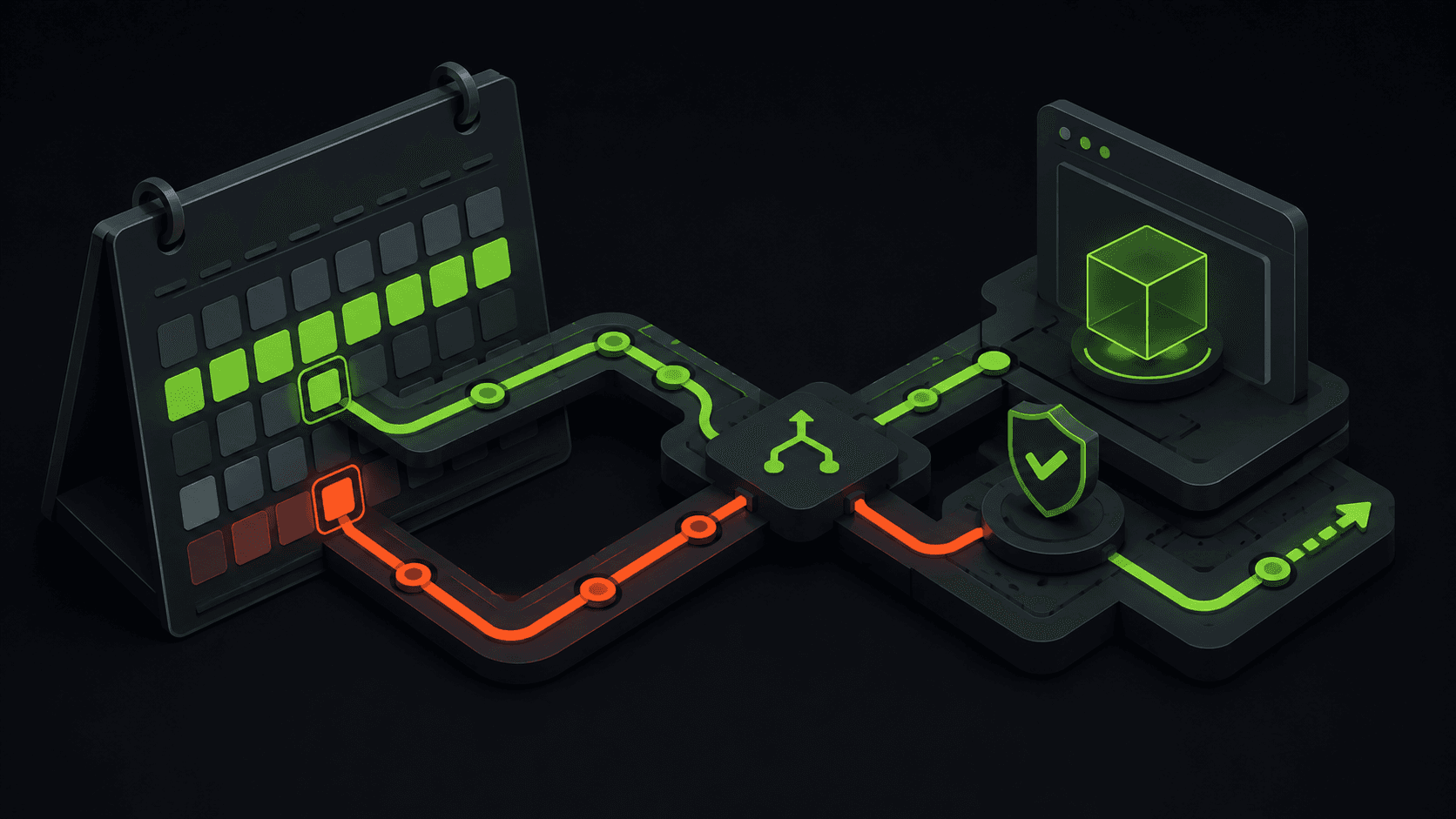
The fix isn't "don't use AI agents in CI." It's the same pattern that's protected distributed systems from third-party outages for a decade: treat the agent as an unreliable remote dependency, not a trusted local step.
❌ Wrong approach — AI review agent as a hard merge gate
# .github/workflows/pr-check.yml
name: PR Checks
on: pull_request

jobs:
  ai-review:
    runs-on: ubuntu-latest
    steps:
      - uses: actions/checkout@v4
      - name: Run AI code review
        run: node scripts/ai-review.js
        # No timeout, no fallback — if this call hangs or the
        # provider is degraded, the job hangs or fails, and the
        # branch protection rule blocks every merge on the repo.
Consequence: one degraded API call from your AI provider — not your code, not your team — stops every engineer from merging until someone notices and manually disables the check.
✅ Right approach — circuit breaker with a manual-review fallback
// scripts/ai-review.js
const TIMEOUT_MS = 15_000;
const FAILURE_THRESHOLD = 3;

async function runAiReview(diff) {
  const controller = new AbortController();
  const timer = setTimeout(() => controller.abort(), TIMEOUT_MS);

  try {
    const result = await callReviewAgent(diff, { signal: controller.signal });
    clearTimeout(timer);
    recordSuccess();
    return { status: "reviewed", result };
  } catch (err) {
    clearTimeout(timer);
    recordFailure();

    if (getRecentFailureCount() >= FAILURE_THRESHOLD) {
      // Circuit open: stop hammering a degraded provider and
      // fall back to a required human review label instead of
      // blocking the merge outright.
      await applyLabel("needs-human-review");
      return { status: "degraded", fallback: "manual-review" };
    }
    throw err; // let CI retry on the next push within threshold
  }
}
Consequence: an AI-provider outage costs your team a manual review step, not a frozen release pipeline — and you find out from a dashboard, not from an engineer asking why nothing has merged since lunch.
What Does an 8-Hour AI-Agent Outage Actually Cost a Funded Startup?
Use a simple formula to put a number on it before it happens to you:
Cost = (Blocked Engineers × Fully Loaded Hourly Rate × Hours Blocked) + Deploy-Delay Impact
Naive approach (hard AI gate, no fallback) — 12-engineer team, $85/hr loaded rate, full 8-hour outage: 12 × $85 × 8 = $8,160 in blocked engineering time alone, before counting a missed release window, a delayed investor demo, or an SLA breach with a customer waiting on that release.
Bhallisoft-pattern approach (circuit breaker, 3-strike threshold at 15s timeouts) — same team, same outage: Circuit opens inside roughly 45 seconds of the provider degrading; the team is merging under manual review again within 15–30 minutes while the incident is triaged. 12 × $85 × 0.5 = $510.
That's not a hypothetical delta — it's the difference between an outage that costs you a status-page screenshot and one that costs you a release cycle.
Which Resilience Pattern Should You Actually Adopt?
| Pattern | Detection Time | Recovery Effort | Best-Fit Team |
|---|---|---|---|
| Hard dependency, no fallback | Manual (engineer reports it) | High — someone manually disables branch protection | Not recommended past a solo-founder prototype |
| Timeout + retry only | Minutes | Medium — retries can amplify load on a degraded provider | Early-stage teams with low release-cadence pressure |
| Circuit breaker + human fallback | Under 1 minute (automated health check) | Low — pipeline keeps moving in degraded mode | Funded startups shipping on a fixed release cadence |
| Multi-provider AI redundancy | Under 1 minute | Low-to-medium — requires a second vendor integration | Later-stage or regulated (fintech) teams where any gate failure is compliance-sensitive |
For most Series A/B startups, the circuit-breaker-plus-fallback row is the right stopping point: it's a few hours of engineering work, and it converts a vendor outage from a blocked pipeline into a logged, degraded-mode event.
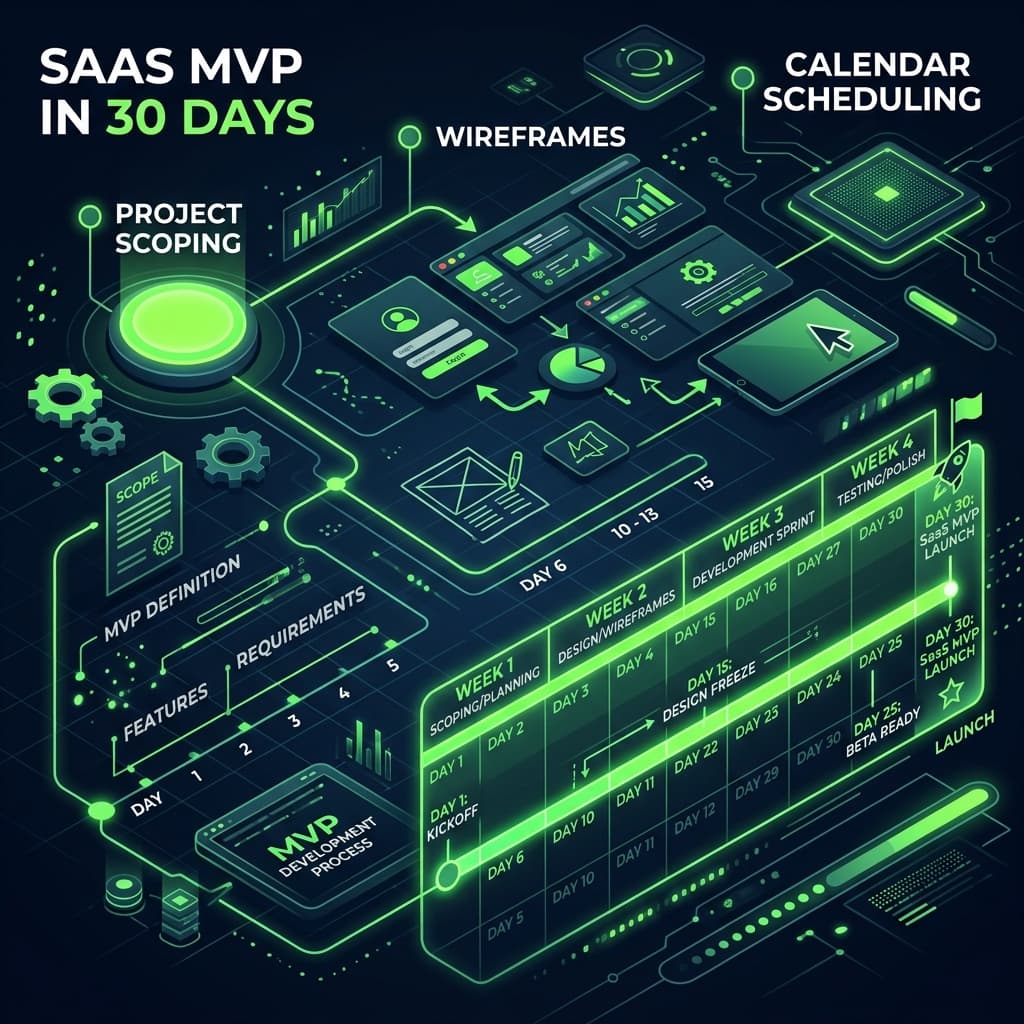
We've written before about how we design CI/CD pipelines for funded startups shipping on a 30-day MVP timeline, and about what actually breaks first when an early-stage fintech pipeline scales past its first few thousand users — both cover the same underlying discipline: treat every external dependency, AI or otherwise, as something that will eventually fail on a schedule you don't control.
GitHub's August 17 outage wasn't unusual because it happened — the company logged 26 incidents in July alone. It was unusual because it showed, in public, exactly how an AI agent's failure domain can decouple from the platform around it. If your pipeline can't tell the difference between "the AI reviewer is slow" and "the AI reviewer is gone," you don't have an AI integration — you have a single point of failure with a chat interface.
Building or hardening a release pipeline that has AI agents in the loop? We architect CI/CD systems — including AI code review, agentic testing, and deploy gates — with circuit breakers and fallback paths built in from day one, for funded startups who can't afford a merge freeze during a demo week. Book a free scope call →