How We Design CI/CD Pipelines for Funded Startups Shipping on a 30-Day MVP Timeline
DORA's 2025 State of DevOps research, run by Google Cloud, found something founders racing to ship an MVP need to sit with: increased AI coding tool adoption correlates with increased software delivery instability — a rising change failure rate — even as it improves individual developer effectiveness and code quality. The tools make each engineer faster. They don't make your pipeline safer. Those are two different problems, and only one of them gets solved by better prompting.
DORA's classification data backs this up at the extremes. Elite-performing teams deploy on demand, with lead times under an hour and change failure rates between 0–15%. Low performers take one to six months to ship a single change, need one week to a month to recover from a bad one, and see failure rates of 46–60%. The gap between those tiers isn't a talent gap — it's a pipeline-discipline gap, and it shows up fastest exactly when you're moving fastest: a 30-day MVP sprint, with AI agents generating a meaningful share of the diffs.
What Does the DORA Data Actually Say About Speed vs. Stability at MVP Stage?
The uncomfortable finding isn't that AI tools produce worse code — it's about volume outpacing your pipeline's ability to catch problems. AI increases the rate of code generation faster than most early-stage review and deployment infrastructure can absorb it. If your MVP pipeline was built for "one founder pushing a few commits a day," and you're now merging AI-agent-generated PRs several times an hour, you've changed the throughput assumption your pipeline was designed around without changing the pipeline.
That's not an argument against AI-assisted development — it's the argument for building the pipeline correctly from day one instead of retrofitting it after the first broken production deploy during a customer demo.
How Do You Architect a CI/CD Pipeline That Survives a 30-Day Build Sprint With AI-Generated Code?
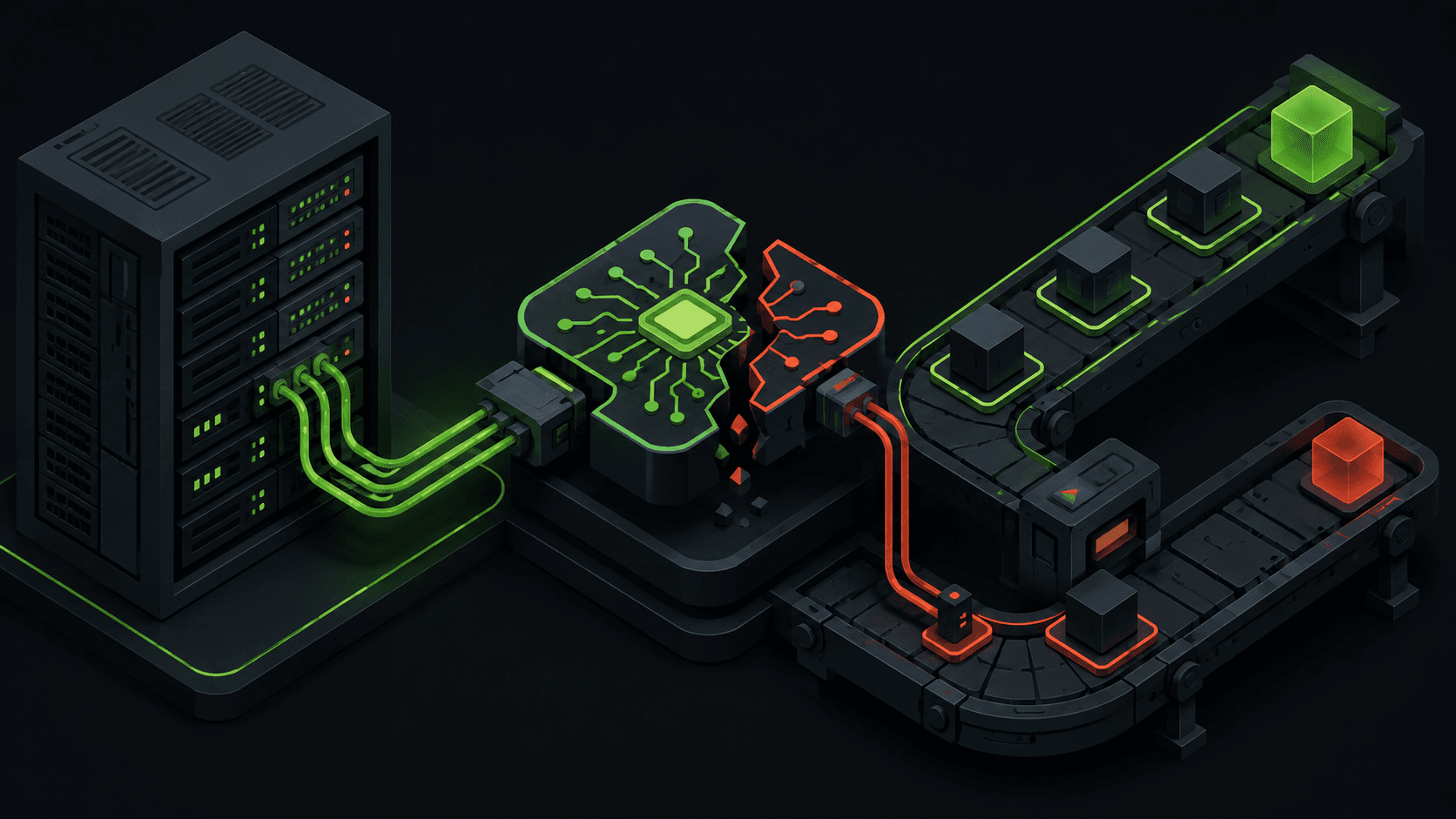
The instinct on a tight timeline is to strip the pipeline down to "push to main, deploy on merge." That's exactly backwards. A 30-day sprint is when you can least afford to discover a broken build manually — you don't have a QA team, and you don't have slack in the calendar to absorb a lost day.
❌ Wrong approach — merge straight to production with no gate
# .github/workflows/deploy.yml
name: Deploy
on:
  push:
    branches: [main]

jobs:
  deploy:
    runs-on: ubuntu-latest
    steps:
      - uses: actions/checkout@v4
      - run: npm ci
      - run: npm run build
      - run: npm run deploy
        # No test run, no preview environment, no smoke check —
        # every merge to main goes straight to whatever your
        # investors or first users are looking at right now.
Consequence: an AI agent's plausible-looking but broken PR reaches production the moment someone approves it — and you find out from a user, not from CI.
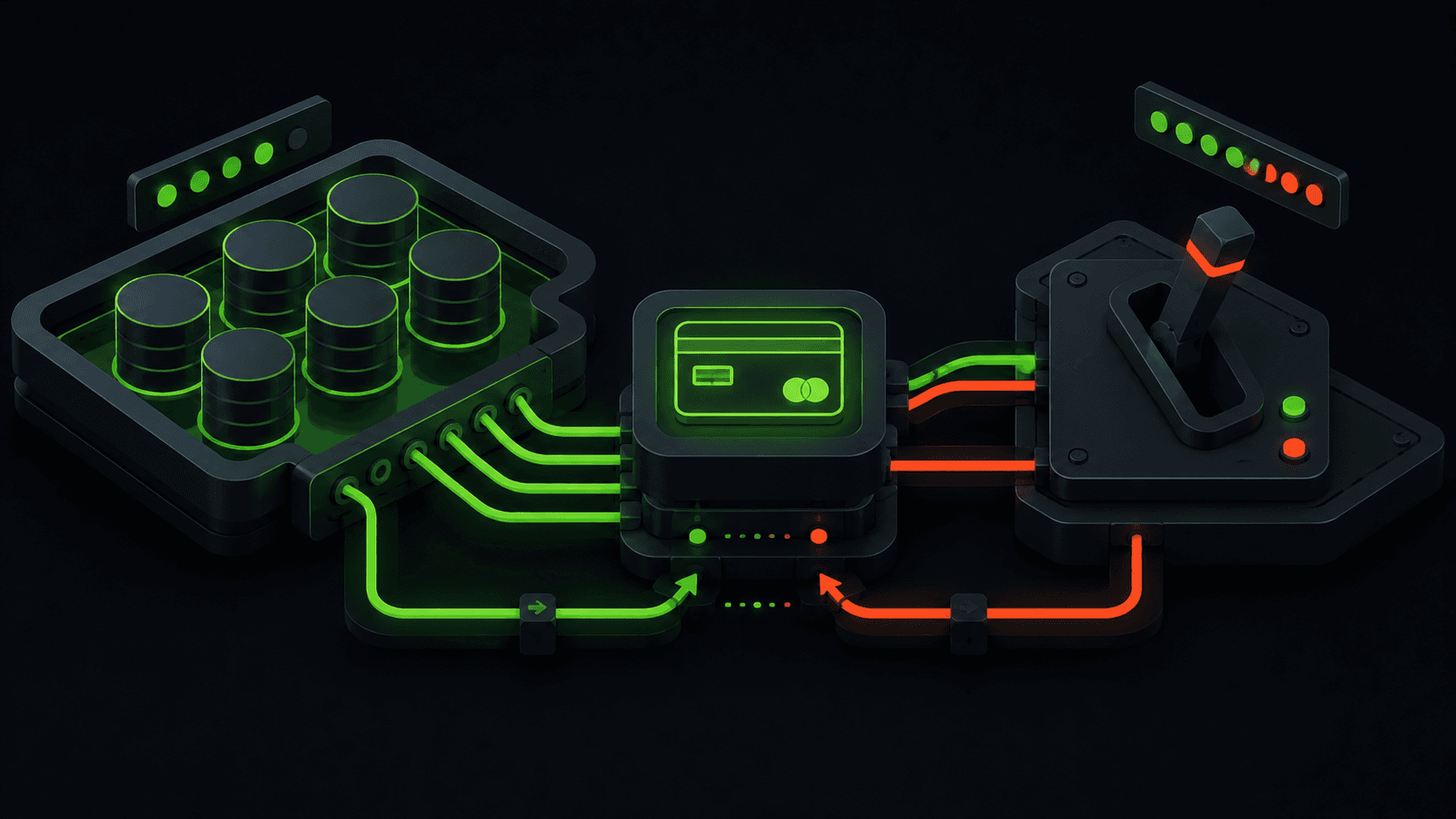
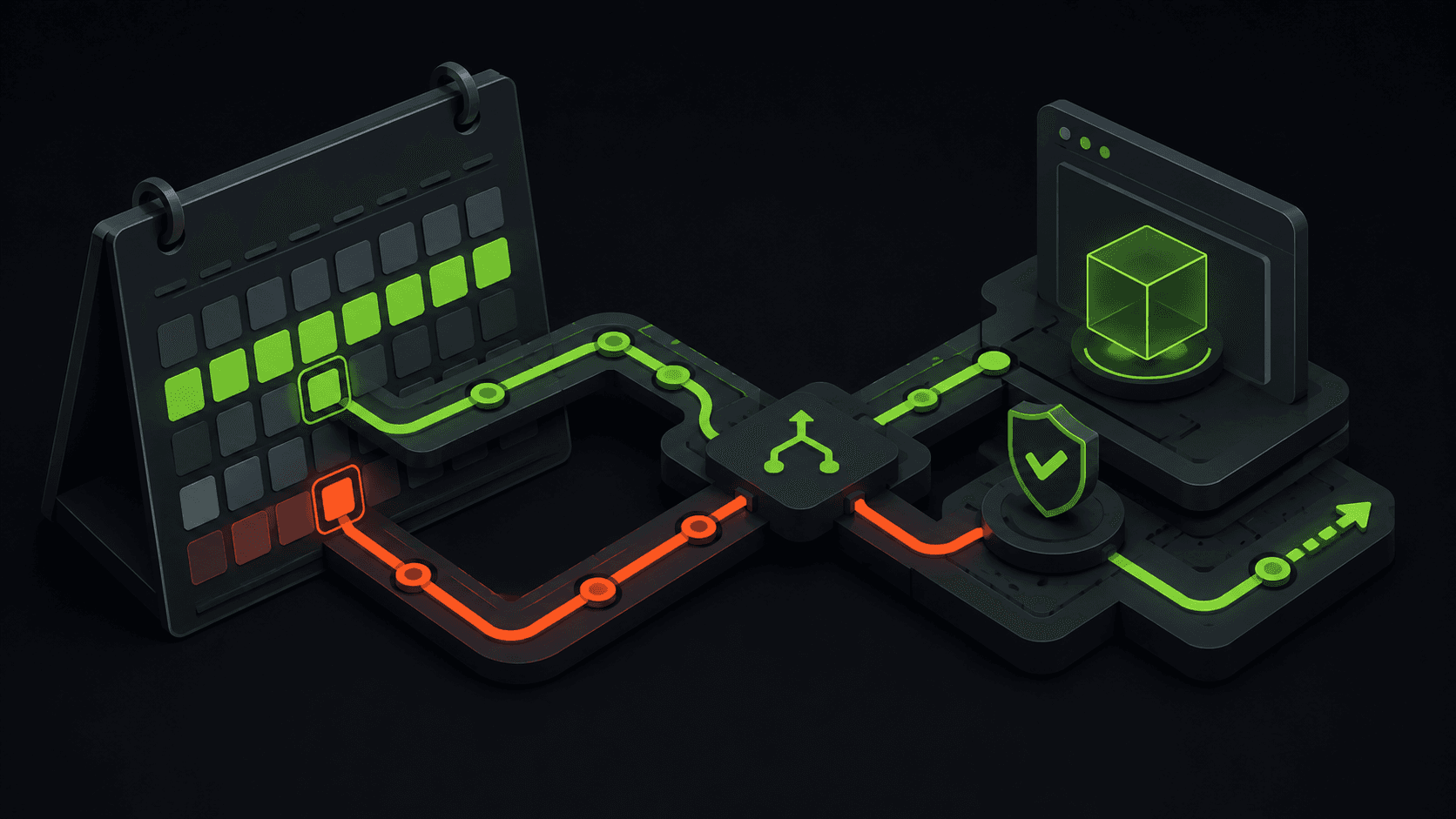
✅ Right approach — preview deploy + automated smoke gate before merge
# .github/workflows/pr-preview.yml
name: PR Preview & Smoke Test
on: pull_request

jobs:
  preview:
    runs-on: ubuntu-latest
    steps:
      - uses: actions/checkout@v4
      - run: npm ci
      - run: npm run build
      - name: Deploy preview environment
        id: preview
        run: npm run deploy:preview
      - name: Run smoke tests against preview URL
        run: npm run test:smoke -- --url="${{ steps.preview.outputs.url }}"
        # Smoke tests hit the 3-5 endpoints that matter most
        # (auth, core CRUD, payment or signup flow) before a
        # human ever clicks "merge."
Consequence: a broken PR fails in a preview environment within minutes, with a link a founder can click to see exactly what broke — production stays untouched until it passes.
Which Pipeline Stages Should Never Be Optional, Even on Day 3?
Three things, regardless of how compressed the timeline is:
- A preview environment per PR. Not a shared staging server everyone fights over — an isolated, disposable deploy per branch, so two AI-generated PRs in flight don't mask each other's bugs.
- A smoke test suite covering the money paths. Auth, signup, and whatever the core value-delivering action is (checkout, dashboard load, first API call). Five tests, not fifty — but they run on every PR, no exceptions.
- A single required status check gating merge. Branch protection tied to the smoke suite passing. This is the one control that turns "we should really review this AI PR more carefully" from a hope into an enforced rule.
Everything else — linting, type checks, broader test coverage — layers on after these three exist, not before.
What Does Skipping Pipeline Discipline Actually Cost You Later?
Cost = Engineers Blocked × Loaded Hourly Rate × Hours to Detect and Fix
Naive approach (no gate, detected when a user or investor reports it) — 4-person MVP team, $75/hr loaded rate, ~6 hours from broken merge to fix, discovered the morning of a demo: 4 × $75 × 6 = $1,800 in direct engineering time — before counting the cost of a broken product in front of the person deciding whether to fund your next round.
Bhallisoft-pattern approach (preview deploy + smoke gate catches it pre-merge) — same team, same bug, caught in ~10 minutes by CI instead of hours later by a user: 4 × $75 × (10/60) = $50.
The gap isn't really the $1,750 — it's that one of those numbers happens before anyone outside your team ever sees the bug, and the other one happens in front of them.
Which CI/CD Pattern Should You Actually Adopt for a 30-Day MVP?
| Pattern | Detection Time | Recovery Effort | Best-Fit Team |
|---|---|---|---|
| Direct-to-main, no gate | Manual (user or investor reports it) | High — diagnose live, rollback under pressure | Not recommended past a personal prototype |
| Manual QA pass before merge | Hours — dependent on reviewer availability | Medium | Solo founder, pre-funding prototype |
| Automated smoke suite + preview deploy | Minutes | Low — bug never reaches production | Funded pre-seed/seed team on a 30-day MVP sprint |
| Full staged pipeline (test + preview + canary rollout) | Seconds to minutes | Low — automatic rollback on canary failure | Series A+ team with paying customers and uptime SLAs |
For a 30-day MVP, the preview-deploy-plus-smoke-gate row is the right target — it's buildable in a day and it's the control that actually matches how fast AI-assisted teams are shipping code in 2026.
If your pipeline survives the MVP sprint, the next failure mode usually isn't a bad merge — it's what happens the first time real users hit it at volume. We've covered that pattern specifically for what breaks first when an early-stage fintech pipeline scales past its first few thousand users, and for what happens when an AI agent itself becomes the thing that goes down mid-pipeline, see what the GitHub outage actually teaches us about depending on AI coding agents in production.
Shipping an MVP on a 30-day clock with AI agents doing real work in your codebase? We architect CI/CD pipelines — preview environments, smoke gates, and staged rollouts — built for exactly this pace, for funded startups who can't afford a broken demo. Book a free scope call →